How it works, honestly
The science behind Pet IQ
Pet IQ is a playful profile built from gentle games you play with your pet at home. Each game is modeled on published animal-cognition research. Here’s exactly what they’re based on, and what the test can and can’t tell you.
Last updated 1 October 2026
The short version
Modeled on real research
The games mirror tasks scientists use to study how dogs and cats think: following a point, finding hidden objects, recognizing a name.
You're the observer
You play each game and tap what your pet did. Your answers build a profile across eight abilities.
For fun, not a diagnosis
There's no standardized IQ test for animals. Pet IQ is an owner-observed profile, not a clinical or veterinary assessment.
What the test measures
Every pet gets a score on eight abilities. Some come from the games, some from everyday questions about your pet, and the personality ones have no wrong answers.
Dogs
- Smarts:
- Reading people: following a point, learning a new cue, asking you for help.
- Bonding:
- Connection with you: holding your gaze, catching your yawn.
- Brains:
- Problem-solving: working a cup puzzle, checking before trusting, tricks.
- Sniffing:
- Nose work: sniffing out the right hand and a hidden treat.
- Spirit:
- Personality: energy, chattiness, how they get along. No wrong answers.
- Charm:
- Looks and affection: coat, cuddles, the greeting. No wrong answers.
- Instinct:
- Everyday drives (food, sleep, walks), from your answers.
- Curiosity:
- How they explore the world, from your answers.
Cats
- Agility:
- Balance and body control: the lift-up and the hop-down.
- Wisdom:
- Self-awareness: noticing what's around them, knowing their name.
- Focus:
- Attention: eye contact, string chases, “bird TV”.
- Brains:
- Problem-solving: the cup game, the blanket trick, a stuck toy.
- Spirit:
- Personality: the vibe, chattiness, appetite. No wrong answers.
- Charm:
- Looks and affection: coat, cuddles, hello style. No wrong answers.
- Instinct:
- Everyday cat instincts (nap spots, boxes, 3am zoomies), from your answers.
- Cuteness:
- Every cat scores 10 out of 10. We checked.
The games, and the research behind them
Every game is gentle: nothing beyond a treat, a cup or a toy, and nothing that startles your pet. Where a game is modeled on a specific study, we link it. Where it’s simply a fun observation, we say so.
The 9 dog games
Can owners really run these games at home? Researchers have checked. Stewart et al. (2015): Cognition games run by owners at home reproduced many results from laboratory studies of dogs.
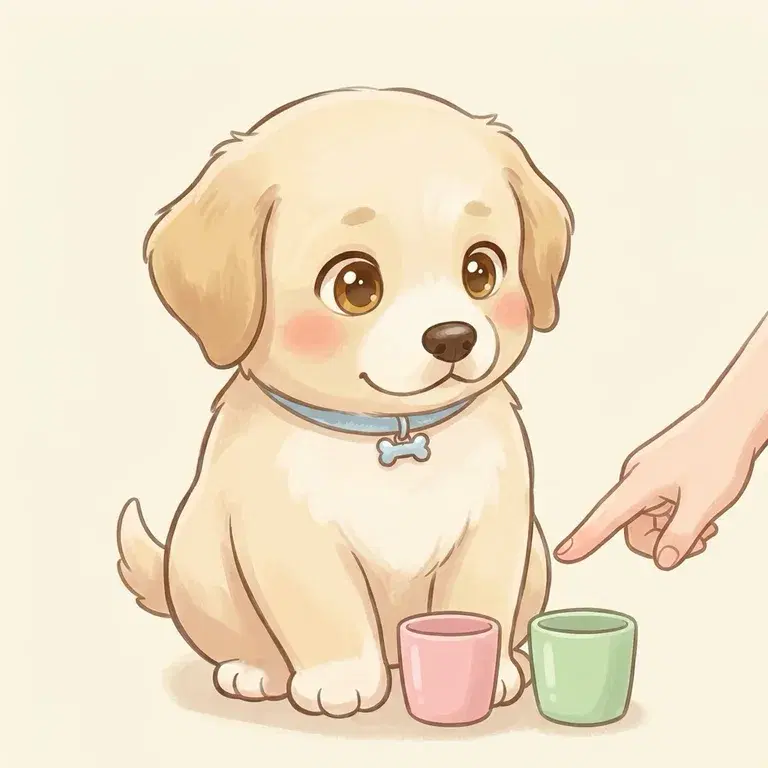
The point
SmartsHow to play: Set out two cups a few steps apart, then point at one while your dog watches.
Watch for: Do they follow your point to the cup, or just stare at your hand?
What it shows: Whether your dog reads a pointing gesture, following your arm to the cup instead of staring at your hand.
Hare & Tomasello (2005): Dogs are unusually skilled at reading human gestures such as pointing, which researchers think was shaped by domestication.

The eye-contact
BondingHow to play: Say your dog's name once, then hold their gaze for a few seconds.
Watch for: Warm, steady eye contact — or instant distraction?
What it shows: How comfortable your dog is holding your gaze. Warm, steady eye contact is part of how dogs bond with people.
Nagasawa et al. (2015): When dogs and their owners gazed at each other, oxytocin, a hormone linked to bonding, rose in both.
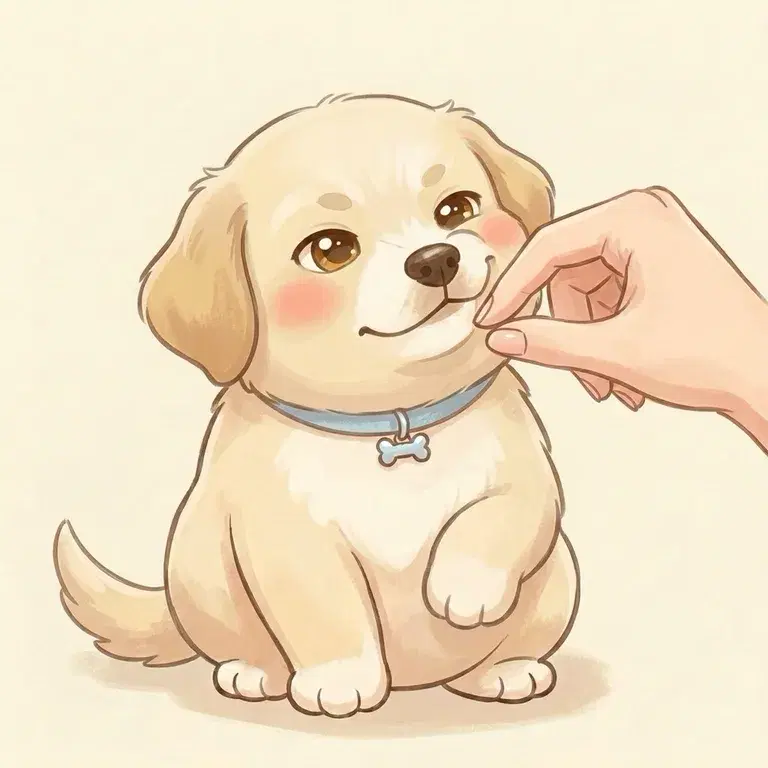
The phantom treat
BrainsHow to play: Pinch your fingers as if holding a treat and offer it to your dog (your hand is empty).
Watch for: Do they sniff first and call your bluff, or gobble at thin air?
What it shows: Whether your dog checks before trusting. A quick sniff of your empty hand calls your bluff.
Takaoka et al. (2015): After a person pointed them to an empty container, dogs stopped following that person's points: they keep track of whether a cue can be trusted.
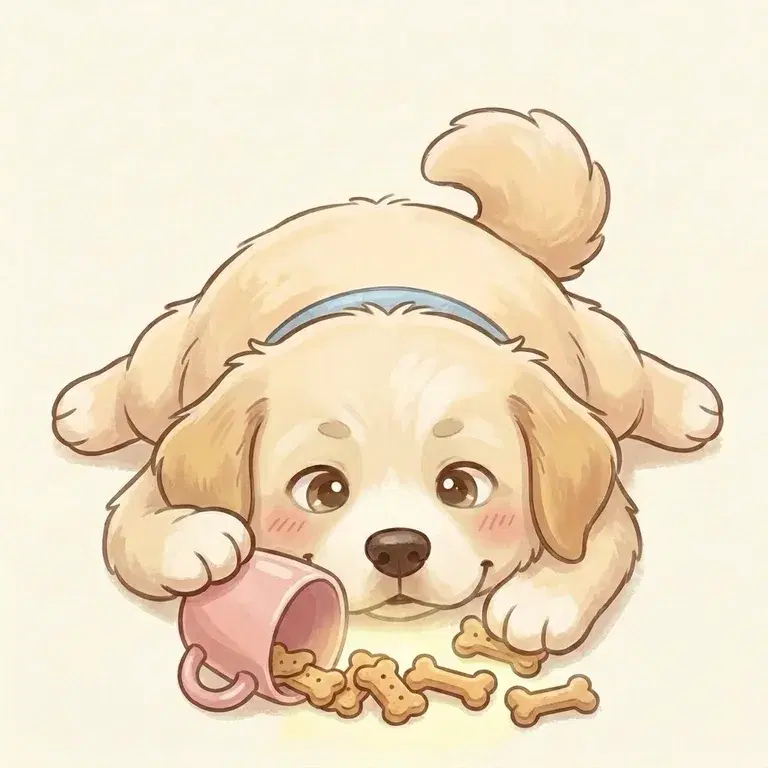
The cup puzzle
BrainsHow to play: Let your dog watch you tuck a treat under a plastic cup, then step back.
Watch for: Do they work the cup until the treat is theirs, or give up with a sigh?
What it shows: Problem-solving persistence: whether your dog keeps pawing and nosing at the cup until the treat is theirs.
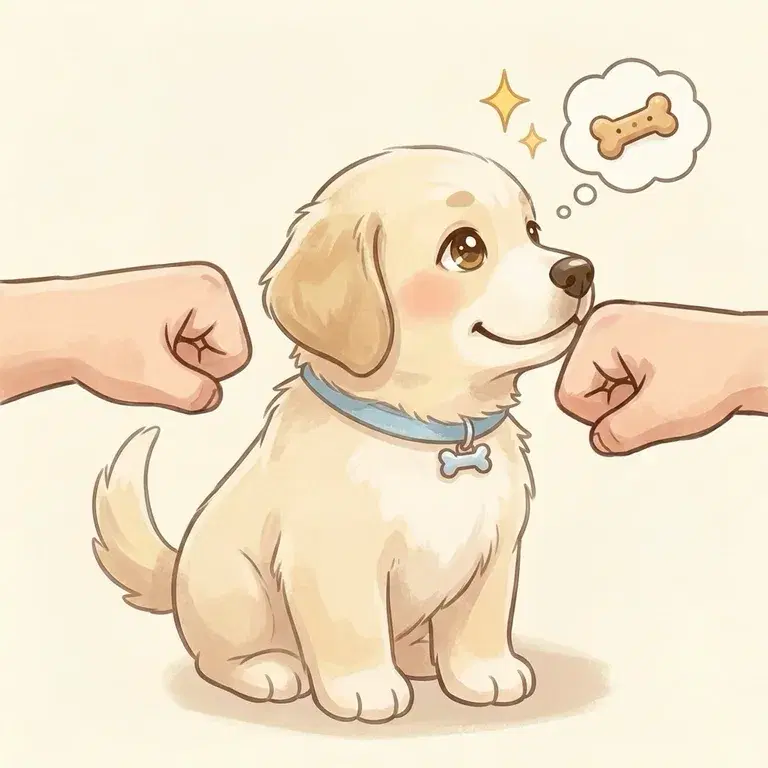
The which-hand
SniffingHow to play: Hide a treat in one fist, show your dog both closed hands, and let them choose.
Watch for: Do they sniff out the right hand, or guess wrong?
What it shows: Whether your dog uses their nose to find the right hand, rather than guessing.
Szetei et al. (2003): Dogs can find hidden food by smell, yet when their owner gives a cue, many follow the cue over their own nose.

The yawn
BondingHow to play: Give a big yawn near your dog.
Watch for: Do they catch it and yawn back, or show no reaction?
What it shows: Whether your dog “catches” your yawn. Contagious yawning has been studied as a possible sign of social connection.
Joly-Mascheroni, Senju & Shepherd (2008): Most dogs in the study yawned after watching a person yawn.
A new cue
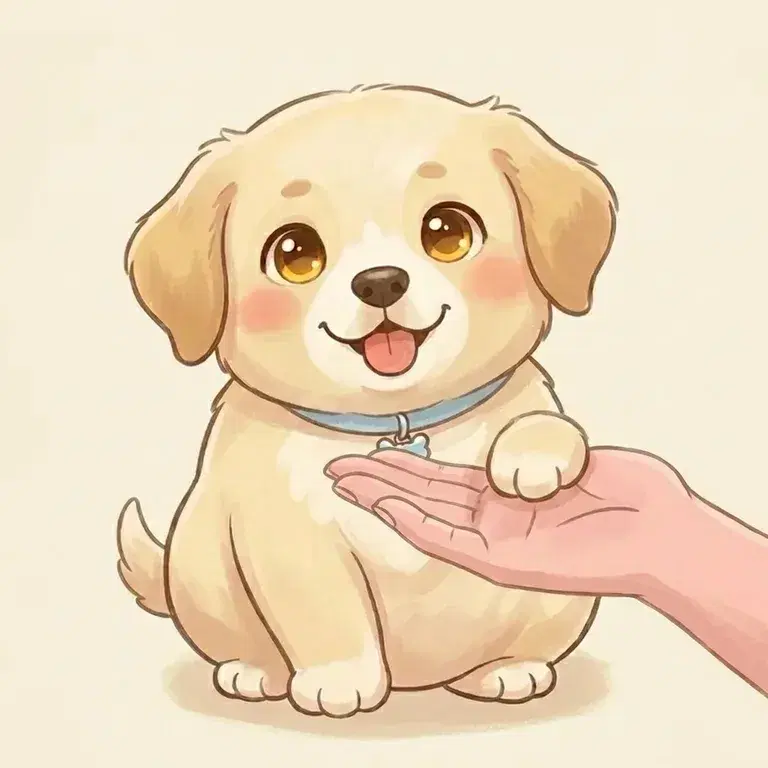
SmartsHow to play: Hold out a flat palm and try teaching your dog to 'touch' it.
Watch for: Do they learn the new trick fast, or not get it?
What it shows: How quickly your dog picks up something new, like touching a flat palm on cue.
Kaminski, Call & Fischer (2004): A Border Collie named Rico knew the names of over 200 toys and could work out a new toy's name by exclusion.
The scent find
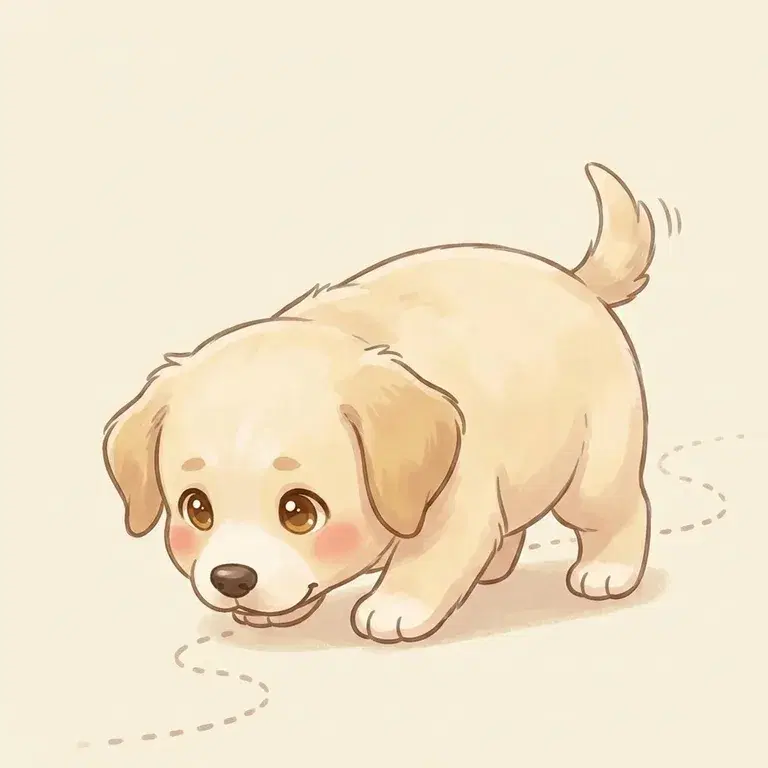
SniffingHow to play: Hide a treat somewhere in the room while your dog waits.
Watch for: Do they sniff it out, or can't find it?
What it shows: How your dog uses smell to search: sniffing it out systematically, or wandering.

The puzzle jar
SmartsHow to play: Put a treat in a jar your dog can't quite open.
Watch for: Do they look up to you for help, or just paw at it alone?
What it shows: Whether your dog looks back to you for help when a problem can't be solved alone.
Miklósi et al. (2003): Faced with a puzzle they couldn't solve, dogs looked back at a nearby person; hand-raised wolves mostly didn't.
The 10 cat games
The personality questions draw on research into how pet cats differ. Litchfield et al. (2017): Owner ratings of thousands of pet cats revealed five broad personality dimensions, the “Feline Five”.
Cats have been studied far less than dogs, so fewer cat games have a direct study behind them. We’ve marked the ones that do.
The lift-up
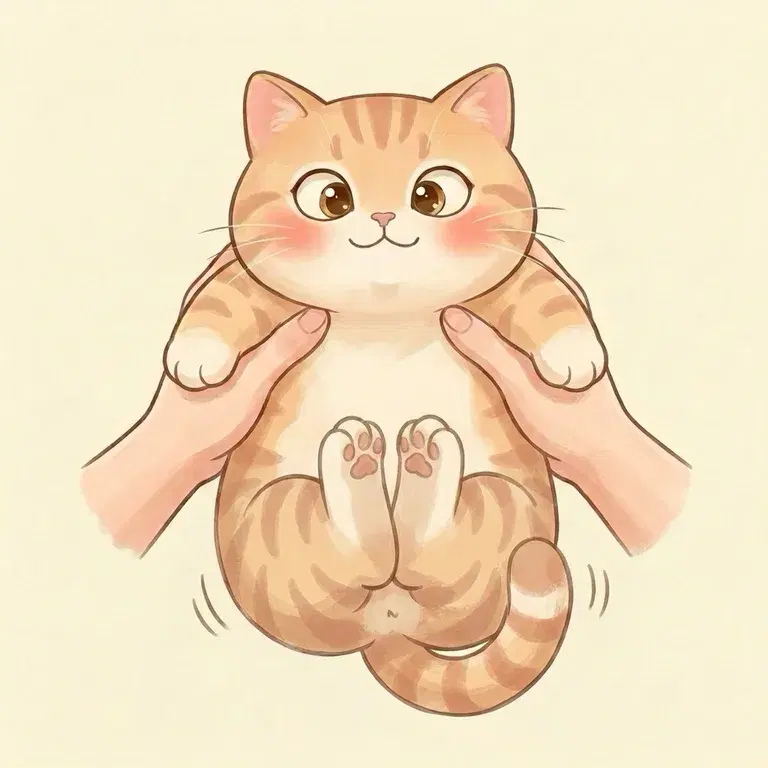
AgilityHow to play: Lift your cat under the front legs and watch the back legs.
Watch for: Do the back legs hang straight down, or curl up ready to balance?
What it shows: Body awareness: whether your cat's back legs stay ready to balance, or simply dangle.
The gentle nudge
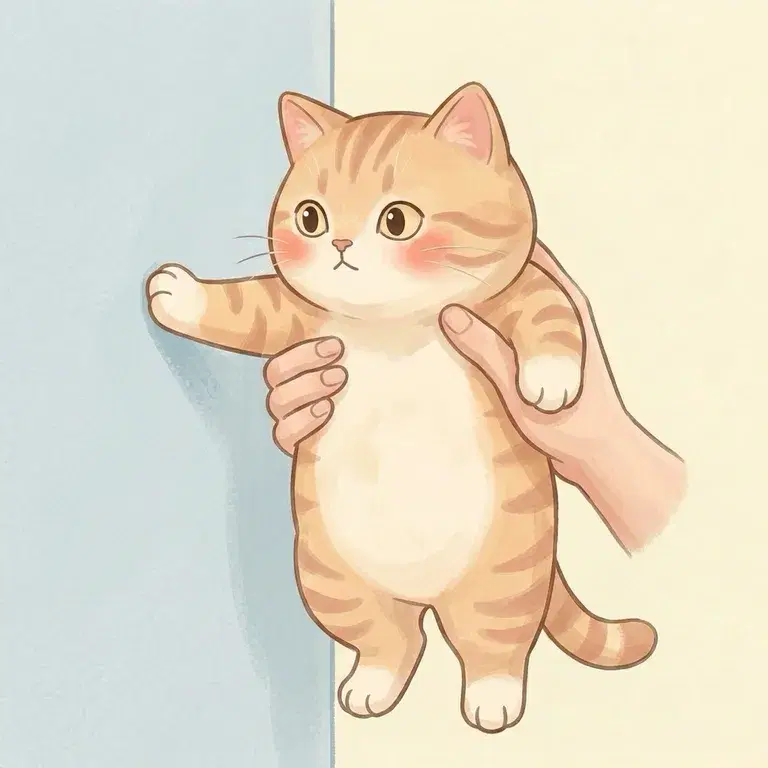
WisdomHow to play: Hold your cat and slowly bring their head NEAR a wall or cushion — never actually touch it, just see if they notice.
Watch for: Do they blink, tense, or put a paw out — or stay totally oblivious?
What it shows: Whether your cat notices their surroundings closing in: a blink, a tense, or a paw put out.
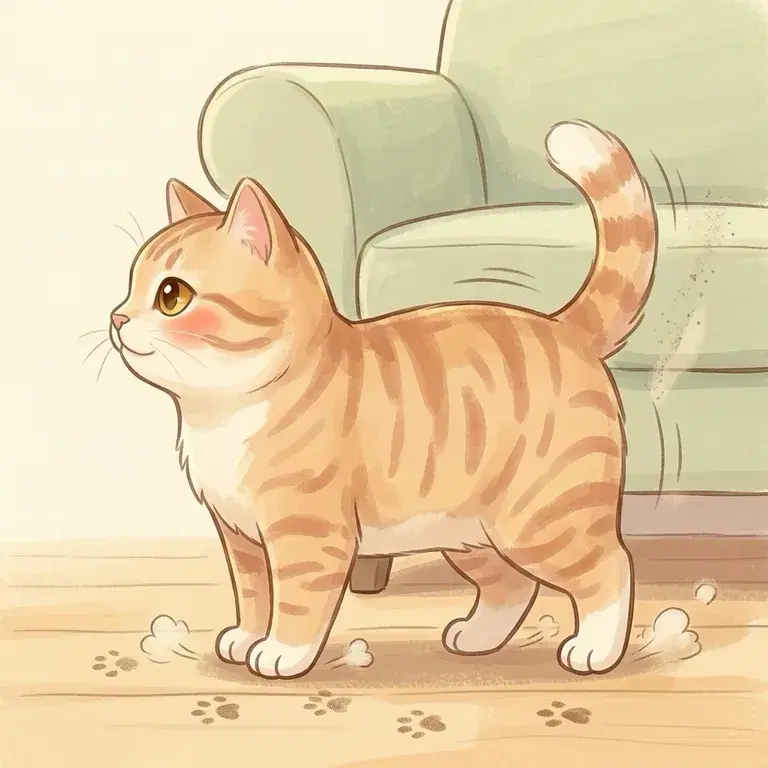
The hop-down
AgilityHow to play: Watch how your cat lands when they hop down from the couch on their own. (Just observe — don't lift or drop them.)
Watch for: A clean four-paw landing, or a clumsy splat?
What it shows: Balance and coordination: how cleanly your cat lands when they jump down on their own.

The eye-watch
FocusHow to play: Look into your cat's eyes for a moment and watch what they do.
Watch for: Bright, tracking, taking it all in — or a blank, dreamy stare?
What it shows: Attention: whether your cat is bright and tracking, or dreamily elsewhere.
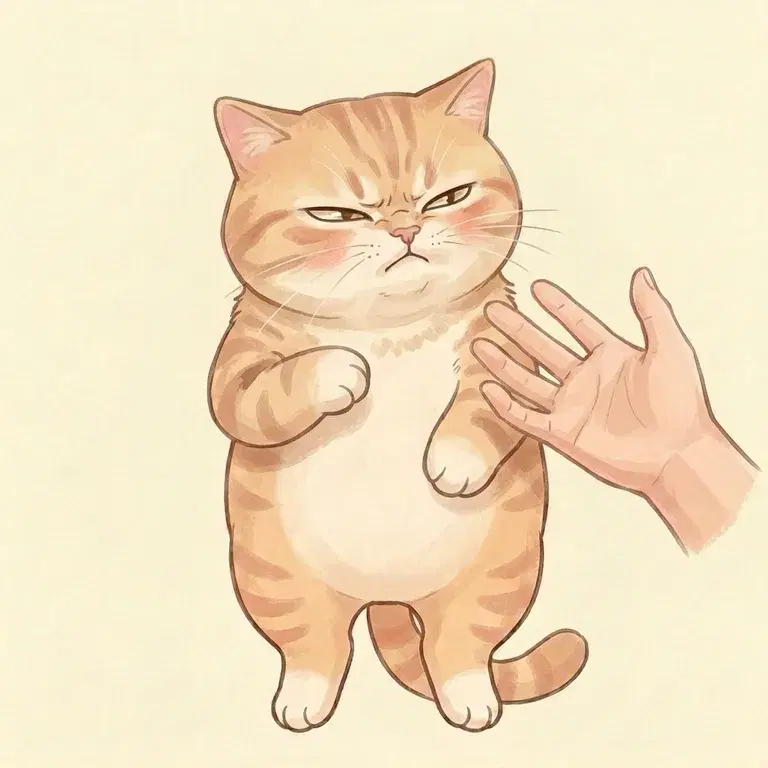
The phantom treat
BrainsHow to play: Pinch your fingers as if holding a treat and offer it to your cat (your hand is empty).
Watch for: Do they sniff first and call your bluff, or lick at thin air?
What it shows: Whether your cat checks before trusting, sniffing your empty hand instead of licking at nothing.
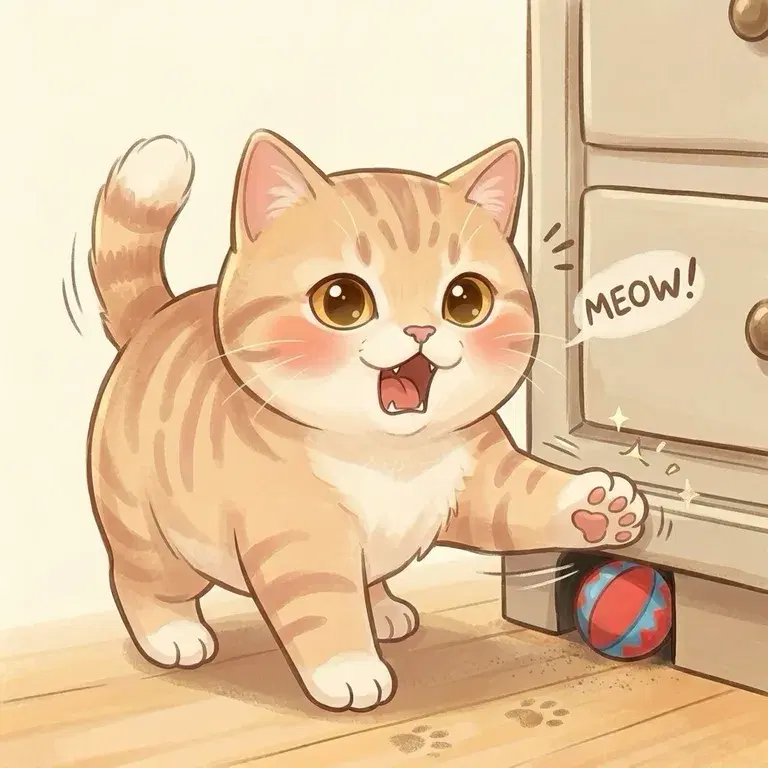
The help-seeking
BrainsHow to play: Tuck your cat's favorite toy just inside a narrow gap they can't quite reach.
Watch for: Do they try once and quit, or keep at it / look to you for help?
What it shows: Persistence and help-seeking: whether your cat keeps trying, or looks to you when the toy is stuck.
Miklósi et al. (2005): Cats followed human pointing about as well as dogs, but were less likely to look to a person for help when a task couldn't be solved.
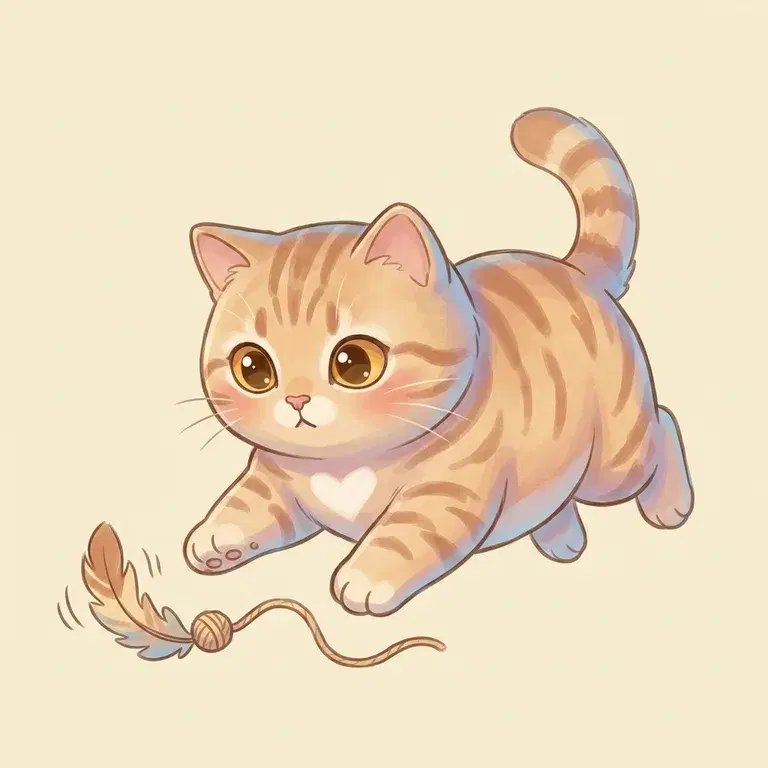
The string chase
FocusHow to play: Drag a wiggly string for your cat to chase.
Watch for: Do they lock on and pounce, or lose track of it?
What it shows: Visual tracking: whether your cat locks on and follows a moving target.

The cup game
BrainsHow to play: Hide a treat under one of two cups while your cat watches.
Watch for: Do they check the right cup, or paw at random?
What it shows: Whether your cat remembers which cup hides the treat after watching it disappear.
Doré (1986): Adult cats keep track of an object after it is hidden from view, an ability called object permanence.
The name call
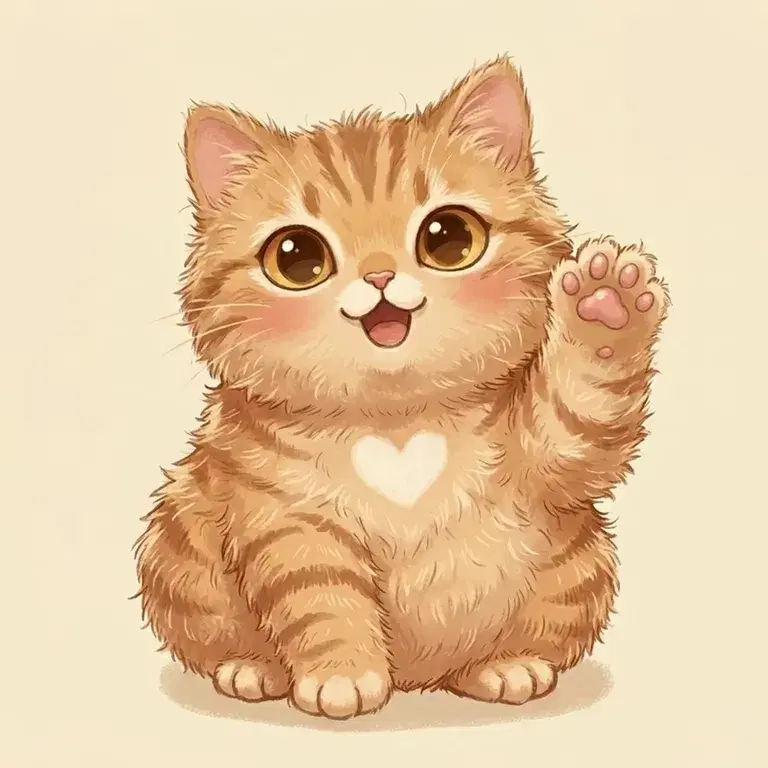
WisdomHow to play: Say your cat's name once in a normal voice.
Watch for: Do they turn to you, or ignore you completely?
What it shows: Whether your cat recognizes their own name. A turn of the head or an ear flick counts.
Saito et al. (2019): Cats responded more to their own name than to similar-sounding words.
The blanket trick
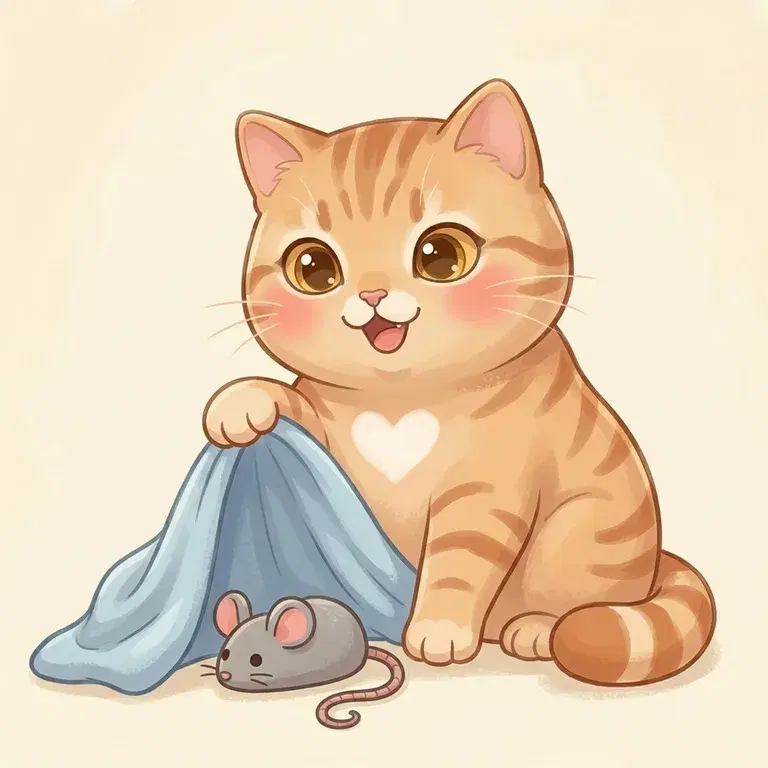
BrainsHow to play: Hide your cat's toy under a blanket while they watch.
Watch for: Do they dig where it vanished, or forget it the moment it's gone?
What it shows: Object permanence: whether your cat knows the toy still exists under the blanket, and digs right where it vanished.
Goulet, Doré & Rousseau (1994): Cats hold a short-term memory of where a hidden object disappeared, and search right there.
Keep every game gentle. Stop if your pet seems unsure, and always let them win the treat.
How answers become a result
- Each answer feeds one of the eight abilities. The games and a few curiosity and problem-solving questions are scored; personality questions have no wrong answers and instead shape which character traits stand out.
- Your pet’s type is their standout ability: where they score highest compared with typical answers.
- The Pet IQ number is a playful, IQ-style score based mainly on the problem-solving games. It’s for fun: it isn’t a standardized IQ, and it can’t be compared with a human IQ.
- Nothing is random: the same answers always give the same result.
What it can’t tell you
- It reflects what you saw, on one day. A sleepy or distracted pet may play differently tomorrow.
- It isn’t standardized or clinical, and it isn’t veterinary or behavioral advice.
- It can’t spot health problems. Sudden changes in behavior, avoiding the litter box, aggression or extreme fear can have medical causes, so please talk to your vet.
- It doesn’t rank pets against each other or by breed. Every pet is a wonderful companion.
References
- Doré (1986). Object permanence in adult cats (Felis catus). Journal of Comparative Psychology. https://doi.org/10.1037/0735-7036.100.4.340
- Goulet, Doré & Rousseau (1994). Object permanence and working memory in cats (Felis catus). Journal of Experimental Psychology: Animal Behavior Processes. https://doi.org/10.1037/0097-7403.20.4.347
- Hare & Tomasello (2005). Human-like social skills in dogs? Trends in Cognitive Sciences. https://doi.org/10.1016/j.tics.2005.07.003
- Joly-Mascheroni, Senju & Shepherd (2008). Dogs catch human yawns. Biology Letters. https://doi.org/10.1098/rsbl.2008.0333
- Kaminski, Call & Fischer (2004). Word learning in a domestic dog: Evidence for “fast mapping”. Science. https://doi.org/10.1126/science.1097859
- Litchfield et al. (2017). The ‘Feline Five’: An exploration of personality in pet cats (Felis catus). PLOS ONE. https://doi.org/10.1371/journal.pone.0183455
- Miklósi et al. (2003). A simple reason for a big difference: Wolves do not look back at humans, but dogs do. Current Biology. https://doi.org/10.1016/S0960-9822(03)00263-X
- Miklósi et al. (2005). A comparative study of the use of visual communicative signals in interactions between dogs (Canis familiaris) and humans and cats (Felis catus) and humans. Journal of Comparative Psychology. https://doi.org/10.1037/0735-7036.119.2.179
- Nagasawa et al. (2015). Oxytocin-gaze positive loop and the coevolution of human-dog bonds. Science. https://doi.org/10.1126/science.1261022
- Saito et al. (2019). Domestic cats (Felis catus) discriminate their names from other words. Scientific Reports. https://doi.org/10.1038/s41598-019-40616-4
- Stewart et al. (2015). Citizen science as a new tool in dog cognition research. PLOS ONE. https://doi.org/10.1371/journal.pone.0135176
- Szetei et al. (2003). When dogs seem to lose their nose: an investigation on the use of visual and olfactory cues in communicative context between dog and owner. Applied Animal Behaviour Science. https://doi.org/10.1016/S0168-1591(03)00114-X
- Takaoka et al. (2015). Do dogs follow behavioral cues from an unreliable human? Animal Cognition. https://doi.org/10.1007/s10071-014-0816-2
Pet IQ isn’t affiliated with, or endorsed by, any of the researchers or institutions cited here.
Try the games with your pet
Free · about 5 minutes · no sign-up
For fun and enrichment — not a substitute for a veterinarian or certified behaviorist.